There is a clear basis for content that can be removed.
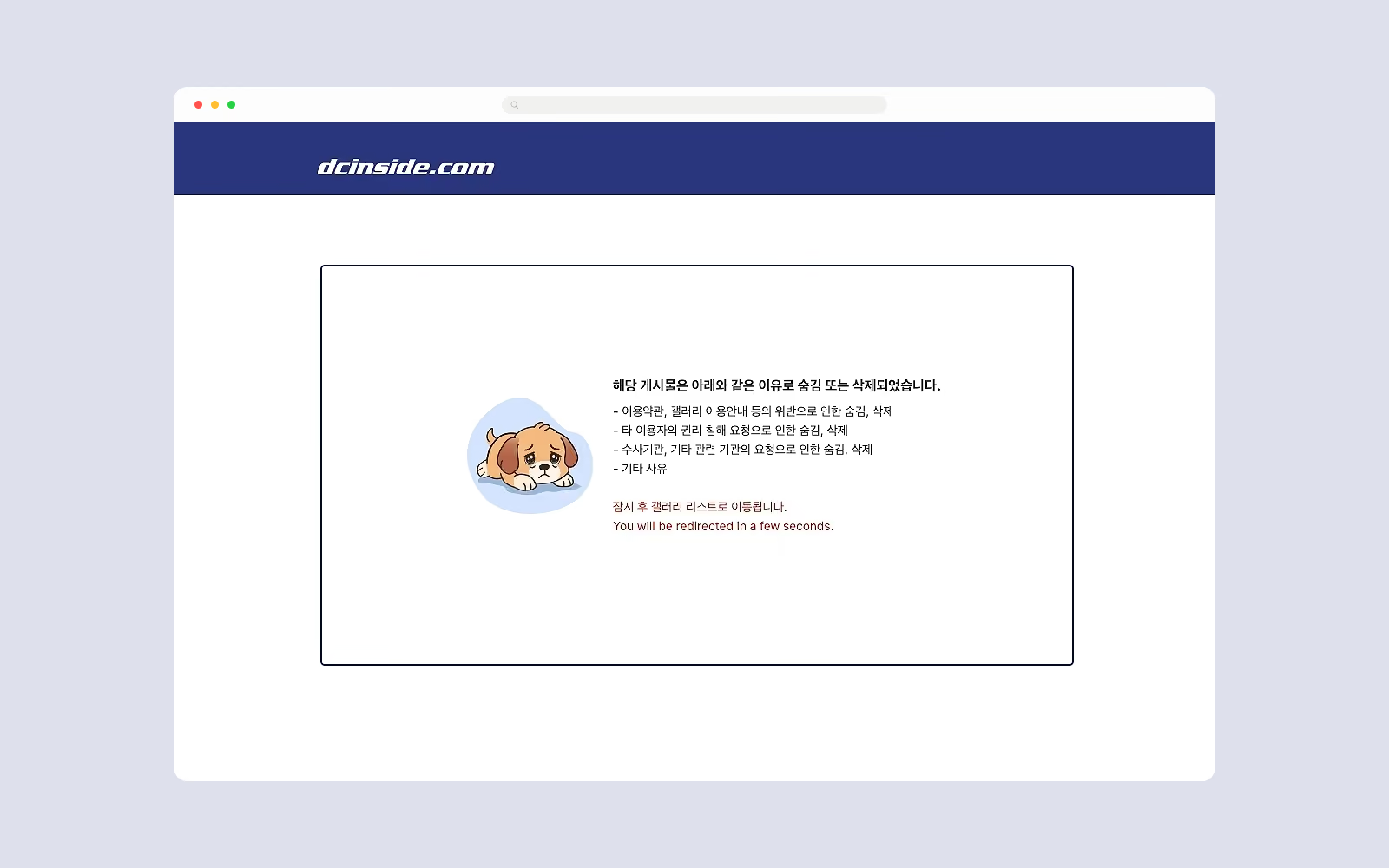
We review the potential for removal based on relevant laws regarding online content and take lawful action against content confirmed to contain illegal elements.
Prevention of Rights Infringement on Information and Communications Networks
Article 44 of the Act on Promotion of Information and Communications Network Utilization and Information Protection, etc. (Protection of Rights on Information and Communications Networks)
① Users shall not distribute information on information and communications networks that infringes upon the rights of others, such as through privacy violations or defamation.
② Information and communications service providers shall endeavor to prevent the distribution of information referred to in Paragraph 1 on the networks they operate and manage.
Deletion and Temporary Measures for Infringing Content
Article 44-2 of the Act on Promotion of Information and Communications Network Utilization and Information Protection, etc. (Request for Deletion of Information, etc.)
① If information made available to the public through an information and communications network infringes upon the rights of others, such as through privacy violations or defamation, the affected party may request the information and communications service provider that processed the information to delete it or post a rebuttal (hereinafter referred to as "deletion, etc.") by substantiating the infringement. In such cases, the person requesting the deletion, etc. (hereinafter referred to as the "applicant") may specify a means, such as text message or email, to be notified of the processing progress and results, and the person who posted the information (hereinafter referred to as the "poster") may pre-specify a means, such as text message or email, to be notified of any measures taken under Paragraph 2. <Amended March 22, 2016; January 3, 2023>
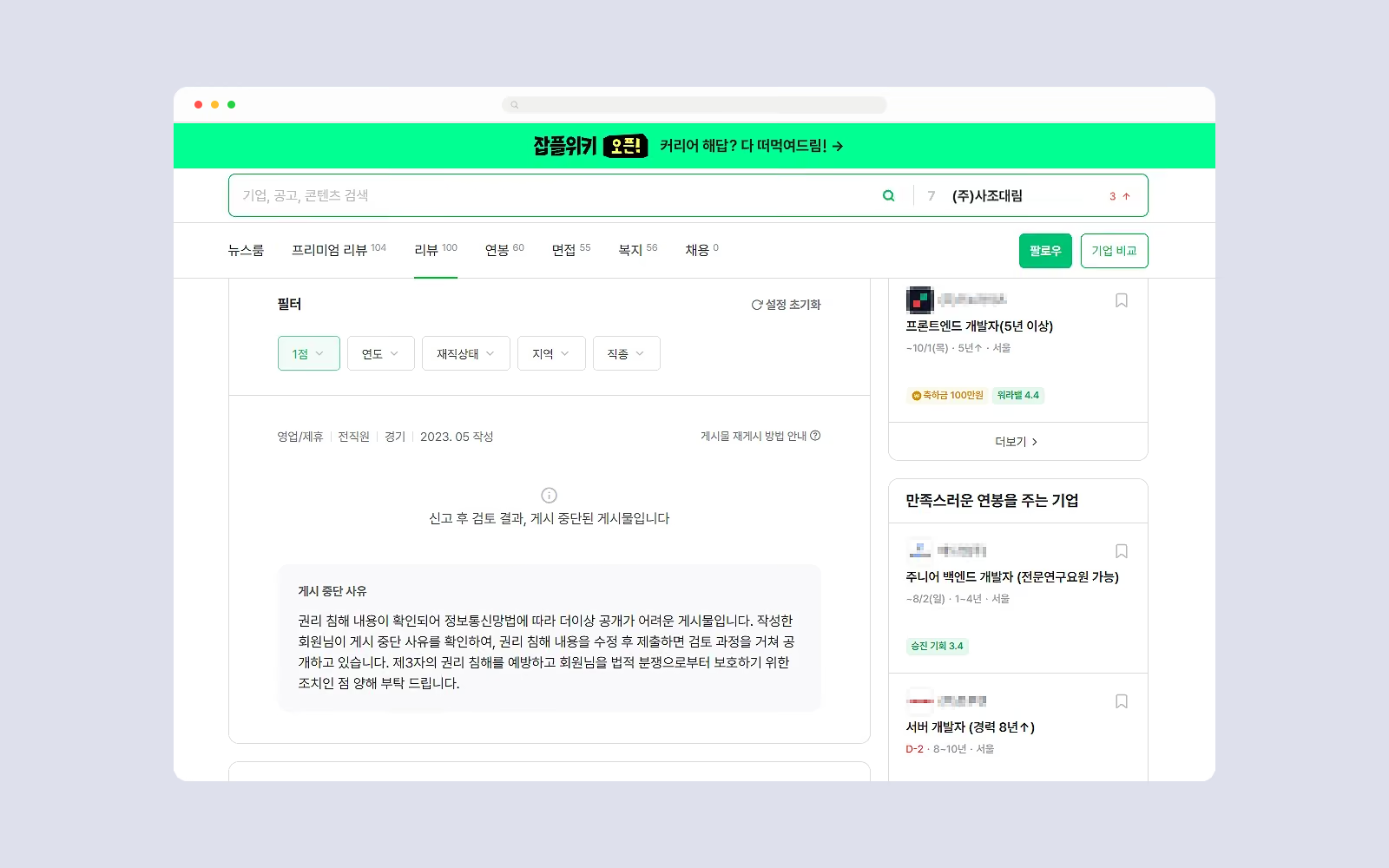
② Notwithstanding a request for deletion under Paragraph 1, if it is difficult for the information and communications service provider to determine whether rights have been infringed or if a dispute between interested parties is expected, the provider may temporarily block access to the information (hereinafter referred to as "temporary measures"). In such cases, the duration of the temporary measures shall not exceed 30 days.
Cyber Defamation
Act on Promotion of Information and Communications Network Utilization and Information Protection, etc., Article 70 (Penal Provisions)
① Any person who publicly reveals facts through an information and communications network with the intent to defame another person shall be punished by imprisonment for up to 3 years or a fine of up to 30 million won.
② Any person who publicly reveals false facts through an information and communications network with the intent to defame another person shall be punished by imprisonment for up to 7 years, suspension of qualifications for up to 10 years, or a fine of up to 70 million won.
Voluntary Temporary Measures by Platforms
Act on Promotion of Information and Communications Network Utilization and Information Protection, etc., Article 44-3 (Voluntary Temporary Measures)
① An information and communications service provider may voluntarily take temporary measures if they determine that information distributed on the network they operate or manage infringes upon the rights of others, such as through privacy violations or defamation.
Laws Regarding Trademark and Logo Theft
Trademark Act, Article 107 (Right to Demand Prohibition of Infringement, etc.)
① A trademark holder or exclusive licensee may demand that a person who infringes or is likely to infringe upon their rights cease or prevent such infringement.
② When a trademark holder or exclusive licensee makes a demand under Paragraph 1, they may request the destruction of items that constitute the infringement, the removal of facilities used for the infringement, or other necessary measures.
③ If a lawsuit is filed to demand the cessation or prevention of infringement under Paragraph 1, the court may, upon the request of the plaintiff or complainant (only applicable when a public prosecution has been filed under this Act), order temporary measures such as the prohibition of the infringing act, the seizure of items used in the infringement, or other necessary actions. In such cases, the court may require the plaintiff or complainant to provide security.
Deepfake Sexual Content
Act on Special Cases Concerning the Punishment, etc. of Sexual Crimes, Article 14-2 (Distribution, etc. of False Images)
① Any person who edits, synthesizes, or processes (hereinafter referred to as "editing, etc.") a photograph, video, or audio recording (hereinafter referred to as "video, etc.") of a person's face, body, or voice against the subject's will in a way that may cause sexual desire or humiliation shall be punished by imprisonment for up to 7 years or a fine of up to 50 million won. <Amended Oct. 16, 2024.>
② Any person who distributes, etc. the edited, synthesized, or processed material (hereinafter referred to as "edited material, etc.") or copies thereof (including copies of copies; hereinafter the same shall apply) under Paragraph 1, or who distributes, etc. such edited material, etc. or copies thereof against the subject's will even if the editing, etc. was not against the subject's will at the time it was performed, shall be punished by imprisonment for up to 7 years or a fine of up to 50 million won. <Amended Oct. 16, 2024.>
* This content outlines key laws used for removal requests. During actual proceedings, we conduct a thorough analysis of the client's damages and the type of content to establish appropriate legal grounds and supporting documentation.








.svg)
.svg)
.svg)









.svg)
.avif)