


Why are overseas customer reviews more difficult to manage than the Korean market?
When an overseas product is launched or a restaurant brand expands locally, customer response from various countries increases rapidly. In particular, online reviews are the first sign of impressions about a product or store. In Korea, you can get a sense of the overall atmosphere by looking at a few familiar platforms, but the overseas market has a much more complex structure.
The reason is simple. This is because the channels through which people leave reviews are different in each country, and the way brands are mentioned is also different.
In some markets, store reviews are more important, while in others, articles or search impressions have a greater impact on brand perception. Even for brands operated by the same company, the way reputation is created varies depending on the market.
Therefore, the burden of checking overseas reviews and monitoring brand reputation is bound to increase on the staff who manage the brand's reputation. Reviews continue to accumulate, but it is difficult to view them all at once, and although the number of channels increases, internal interpretation standards tend to vary.
Therefore, the person in charge goes to each platform, checks the content, organizes only the necessary responses and shares them. At first, this method seems sustainable, but as the number of brands and countries increases, its limitations quickly become apparent.
Company D, a restaurant franchise company, is the protagonist of this case.I was in a similar situation. There were already a lot of product reviews accumulated on domestic platforms, and in the North American and Japanese markets, restaurant brand reviews, product reviews, news articles, and local platform responses were being formed in different languages and contexts.
Although branches in each country can understand local customer reactions to some extent, it was not easy for the headquarters to collect reviews from multiple branches using the same criteria and interpret the overall flow.
In the end, the important thing was not simply to check many reviews, but to connect responses from multiple brands and countries into one standard and read the signals that actually needed management.
📌 Case Preview
- Although it was recognized locally, management at the head office level was difficult.
- The nature of corruption issues varies by country
- Overseas market response, how did we start to view it with the same standards?
- Customer reviews are starting to be read as a ‘flow’ rather than a ‘transient case’
- What if you need to secure overseas customer reviews and professional responses by country?
Although it was recognized locally, management at the head office level was difficult.

Although it was recognized locally, management at the head office level was difficult.
Company D, the protagonist of this customer case interview, is a franchise company that operates several restaurant brands and product lines. In Korea, reviews were already accumulated on various channels, and overseas, brand reviews, product reviews, news articles, and local platform responses were accumulating in different ways, especially in the North American and Japanese markets.
You were checking reviews directly on domestic platforms, and overseas, you had to check the North American and Japanese market channels as well. When did you first realize internally, “This is not a simple monitoring problem, but a problem that needs to be organized structurally,” and what was the most uncomfortable point at that time?
CEO Park Jun-ho: At first, I thought that people in charge could go into each platform and check it themselves. However, as the number of channels increased and the number of brands increased, there were limits to that method. Even when looking at the same content, each viewer had a different take on it. In particular, overseas markets such as Japan and North America had different channels and different languages, so it was not easy for the headquarters to understand what was known locally at a glance. In the end, I kept reading the reviews, but it was difficult to sort out what problems were recurring.
In the early stages of a brand's global expansion, I don't think it would be difficult for the working staff to check customer reviews one by one. However, as the number of brands and countries that need to be monitored increases, the situation changes.
This is because even the same issue can be read completely differently depending on the channel structure and consumer response in each country. The burden felt in practice also increases at this point. Customer reactions that are already known locally cannot be organized into a single flow at headquarters, and as the gap accumulates, operational judgment becomes increasingly difficult.
The case of Company D was similar. The North American market had a significant impact on store experience-centered reviews, while the Japanese market had to look at both local review platforms and search exposure structures.
In addition, there was a structure in which related information was consumed more widely through keywords related to the representative than the company name itself, making it difficult to read the entire flow by simply following the brand name.
Therefore, in this situation, simply looking at more monitoring is not enough. You must be able to read responses from multiple countries and multiple brands using the same standards and distinguish what is a repeat.
That way, you can explain why these negative reviews keep coming, rather than simply saying “there is a negative response.” Ultimately, from then on, review checking will change from simple monitoring to management that is linked to actual operations and decision-making.
The nature of corruption issues varies by country
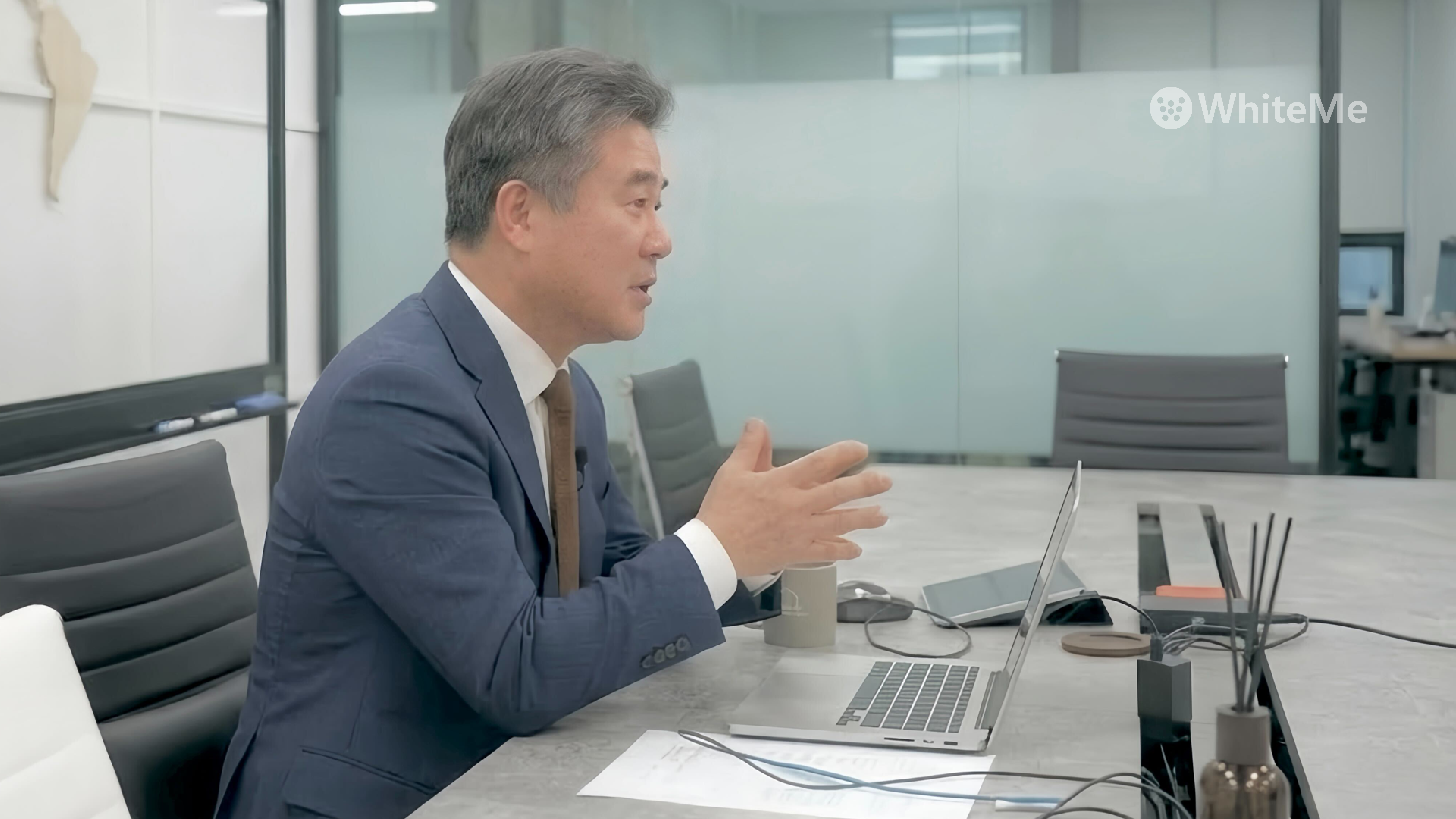
Before seeing the actual data, overseas reactions may have vaguely felt like a single trend. While looking at the North American and Japanese market channels together, at what point did you internally confirm that “the nature of risk is different in each country” and what did you see as the key cause?
CEO Park Jun-ho: Before I saw the data, I thought overseas reactions would just be divided into good and bad. However, in reality, in the Japanese market, the structure of article exposure and hospitality-related reviews were much more important, and in the North American market, dissatisfaction with the store operation experience was more centered than major controversies at the brand level.
Even if it was the same negative review, the content was completely different. In some places, sensitive factors such as price or waiting time were repeated, and in others, sensitive elements such as staff response or increased hygiene were repeated. So, I decided that it was not enough to just look at the denial rate, and that it was more important to separately look at what kind of experience the denial comes from.
In fact, when reading overseas consumer & customer reviews, the important point is closer to ‘context’ than numbers.Looking at Company D's North American market reviews, out of a total of 612 reviews, there were 86 negative reviews, or about 14.1%.
Looking at these numbers alone, it may not seem like an immediate crisis that is difficult to perceive. However, if you break it down by brand, the interpretation is different.
For Chinese restaurant brand A, 64 out of 319 cases were fraudulent, which was about 20.1%, for Korean restaurant brand B, it was 7 out of 62 cases, which was about 11.3%, and for bar restaurant brand C, it was 15 out of 231 cases, which was about 6.5%.
- North American Market Total Reviews: 612
- North American market negative reviews: 86
- Total fraud proportion: approximately 14.1%
- Chinese restaurant brand A: 64 out of 319 cases were negative, approximately 20.1%
- Korean restaurant brand B: 7 out of 62 cases were negative, approximately 11.3%
- Bar-type restaurant brand C: 15 out of 231 cases were negative, approximately 6.5%
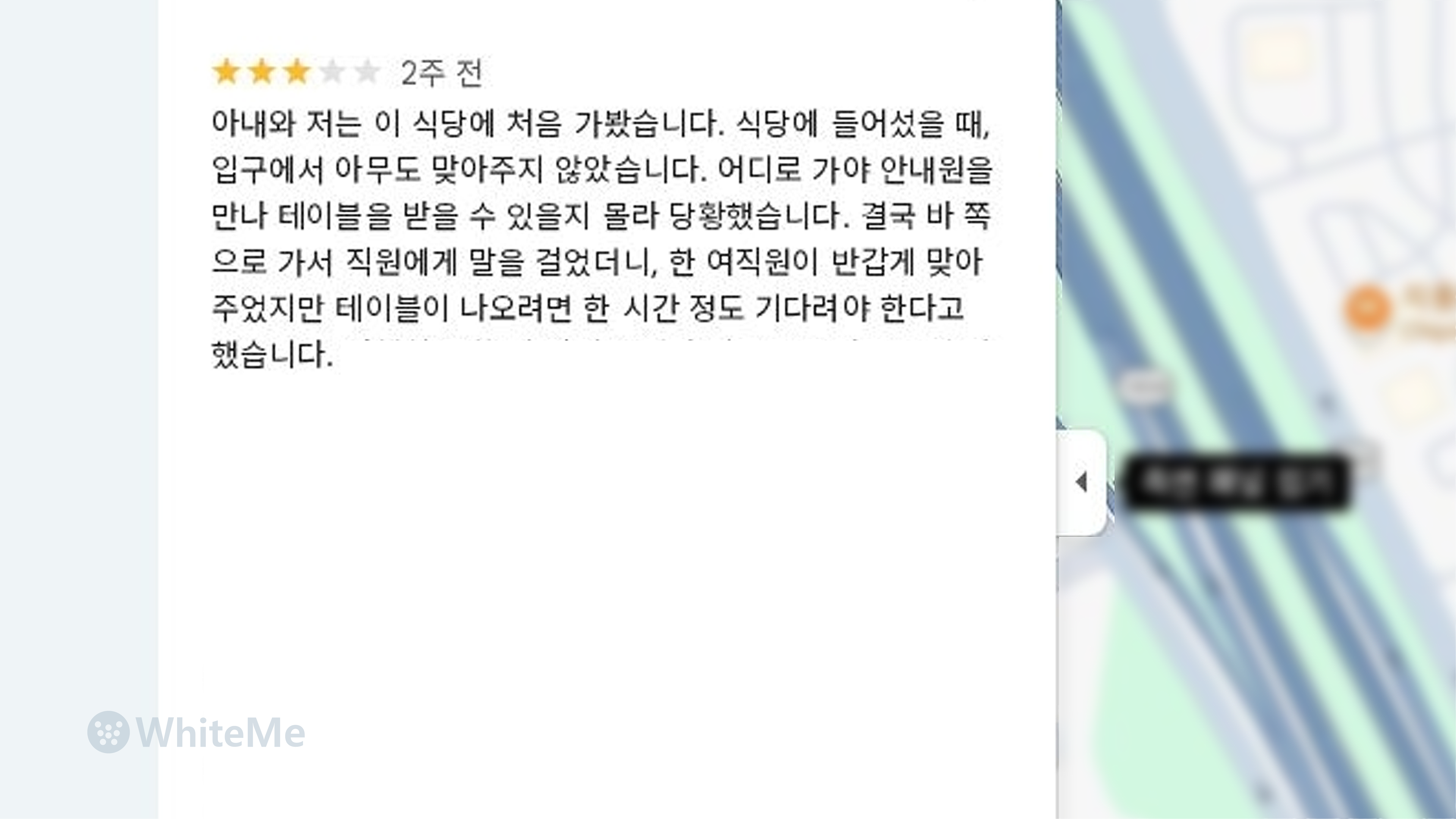
The first place that caught my eye was Chinese restaurant brand A. The negative reviews of Brand A’s restaurants are not the spread of malicious issues.Unsatisfactory customer experience experienced directly at a local storeIt was close to.
As variations in taste, food temperature, texture of some menu items, waiting and serving delays, confusion with self-ordering and pick-up methods, and inconveniences in customer service were repeated, disappointing negative reviews saying, “Operation details are disappointing compared to the brand experience I expected” were accumulating.
Bar-type restaurant brand C had many complaints of the type that undermined the perception of cost-effectiveness, while Korean restaurant brand B had at least a small number of reviews with high sensitivity, such as impressions of service and hygiene.
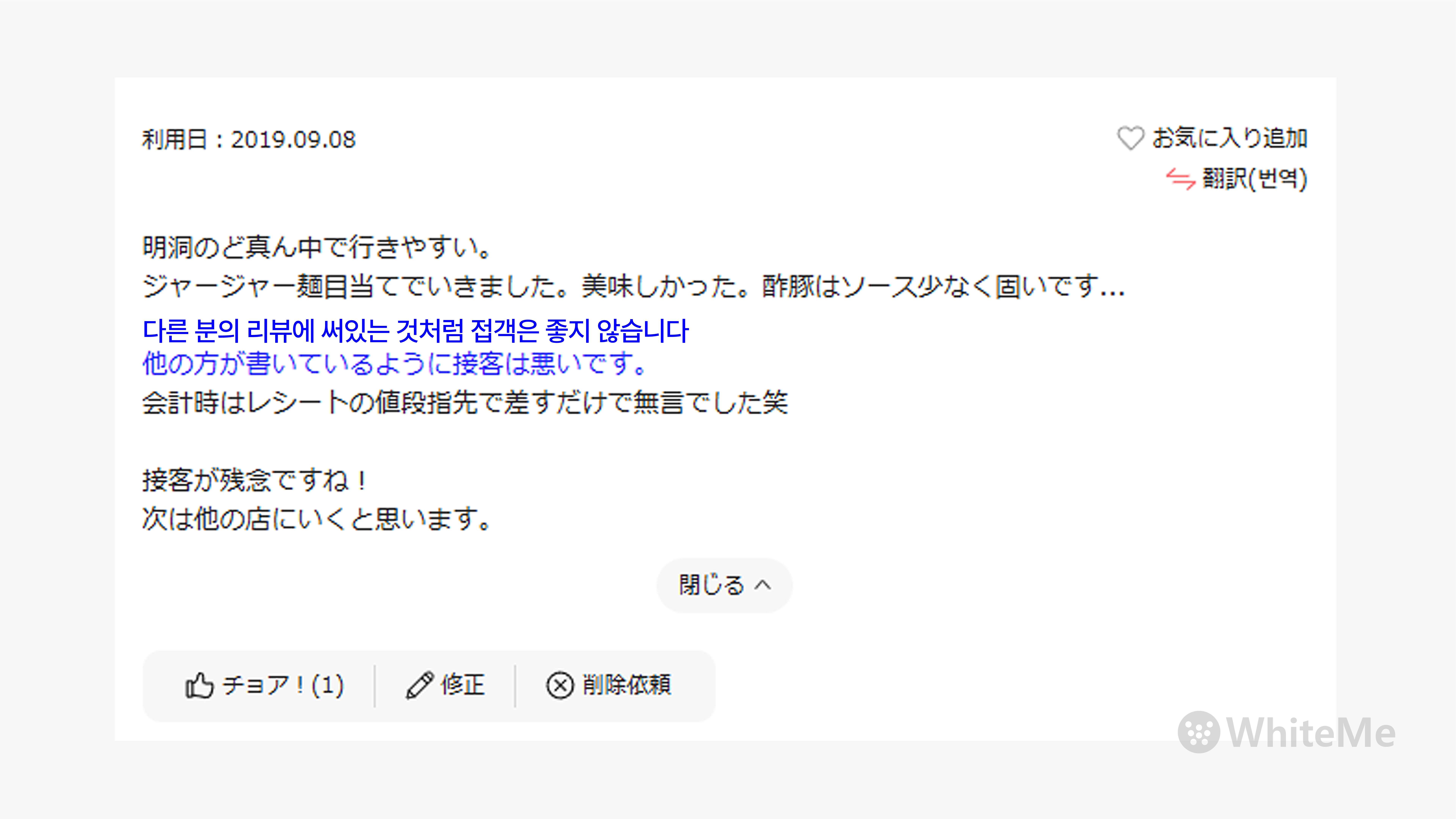
A different pattern was confirmed in the Japanese market. Negative reviews of Korean restaurant brand B and Chinese restaurant brand A are more important than the food itself.The focus was on customer service and employee response issues, and this impression accumulated over a long period of time, causing Japanese customers to avoid certain brands.It was leading to.
On the other hand, bar-type restaurant brand C and other restaurant brands had almost no negative reviews even based on the latest reviews, and relatively stable evaluations were maintained.
In addition, representative-related keywords were more prominently exposed to translated articles or article-type content than pure consumer reviews, and a structure in which some sensitive issue keywords appeared together at the top of searches was also confirmed.
Looking at it this way, there was not just one cause. The North American market had a structure in which offline operation quality translated into reputation, while the Japanese market had a structure in which service experience and search exposure context worked together.
Therefore, interpreting customer reviews by country based on only one criterion could have clouded the judgment on which issues should actually be addressed first.An important part of providing service with Company D was distinguishing the differences.
Overseas market response, how did we start to view it with the same standards?

Overseas market response, how did we start to view it with the same standards?
Even after confirming the cause, it seems that the more difficult problem was actually how to organize this information internally and by what standards to communicate it. What method did you think was needed to create a workable response structure in a situation where business divisions, countries, and channels are all different?
CEO Park Jun-ho: The most difficult thing was not to collect information, but to organize it so that everyone could understand it in the same way. The local customer center knew the local situation, but the headquarters wanted to see the overall flow, and the business unit wanted to know quickly what problems were recurring rather than all the original documents. So, rather than just collecting reviews, we needed a structure that first categorized them by business, channel, and positive/negative criteria, and regularly looked at summary reports and raw data together. I thought that only then would we be able to actually determine which brands were accumulating what types of issues, rather than simply receiving reports.
- Headquarters: Full flow of global customer response
- Business Division: Problems in global customer response
- Solution:
- Classification of positive and negative criteria by data business/channel
- Providing regular reports + raw data list for the data
What was important here was to first create a ‘structure for making judgments’ rather than taking immediate ‘measures’ in response.Just because you need to manage your corporate reputation doesn't mean you can immediately take action on all negative reactions.Rather, in the beginning, it is more important to divide into what to view as recurring issues, what to understand as market characteristics, and what to look at with sensitivity.
Company D needed that very step. That's why we created a structure where we organized overseas channels and keywords first, set standards for how to summarize them through sample reports, and then looked at regular reports and raw data together.
Headquarters and management can quickly understand the overall flow through a summary report, and in practice, when necessary, they can look at raw data and check down to brand-specific cases and actual context.
What was particularly important in this process was that we did not view the North American and Japanese markets in the same way. The North American market had to focus on complaints arising from store operation experience, while the Japanese market had to read hospitality-related perceptions and search exposure structures together. Even for brands under the same company, the way reputation is formed varies depending on the market, so the response system had to be able to be read differently within the same standard, rather than fitting it into the same format.
Ultimately, this structure is needed to distinguish whether the impact of online reviews is an actual operational issue, a search exposure issue, or a brand communication issue. And only when that distinction is made can the next step be decided much more clearly.
In some markets, operational inspection may come first, while in other markets, message supplementation or monitoring of specific keywords may be more important.
Customer reviews are starting to be read as a ‘flow’ rather than a ‘transient case’

Customer reviews are starting to be read as a ‘flow’ rather than a ‘transient case’
The difficulties Company D was experiencing before introducing the service were relatively clear.It's not that there weren't reviews, it was that they were already piled up on multiple channels, but it was difficult to see them all at once.Domestic and overseas responses were divided, and store reviews, product reviews, local reviews, and article exposure were moving separately. As a result, it was not easy for the headquarters to understand at a glance what kind of reputation the brand was developing online during the same period.
Even if negative reviews were seen, there were cases where they were not directly connected to the relevant department, and existing data was accumulated but not systematically managed.
In practice, this is the situation that feels most frustrating. There's a lot of information you're looking at, but it's hard to quickly organize what's important.
Therefore, the regular report provided to reflect Company D's pain points was also prepared to structure the scattered responses by channel into issues by country and brand.
- Previous state: Focus on individual confirmation per channel
- After change: Issues can be structured by country and brand
What was important was not seeing more numbers, but being able to read what issues were recurring for each brand within them.
Previously, when you asked about overseas reactions, examples by channel came first, but now you can first explain which type of problem is being repeated in which country.
In the end, the change shown in Company D's case was clear. We were able to connect scattered responses into a single flow and distinguish between issues that actually needed management.And that change became the starting point for the headquarters to understand and judge overseas markets with clearer standards.
What if you need to secure overseas customer reviews and professional responses by country?
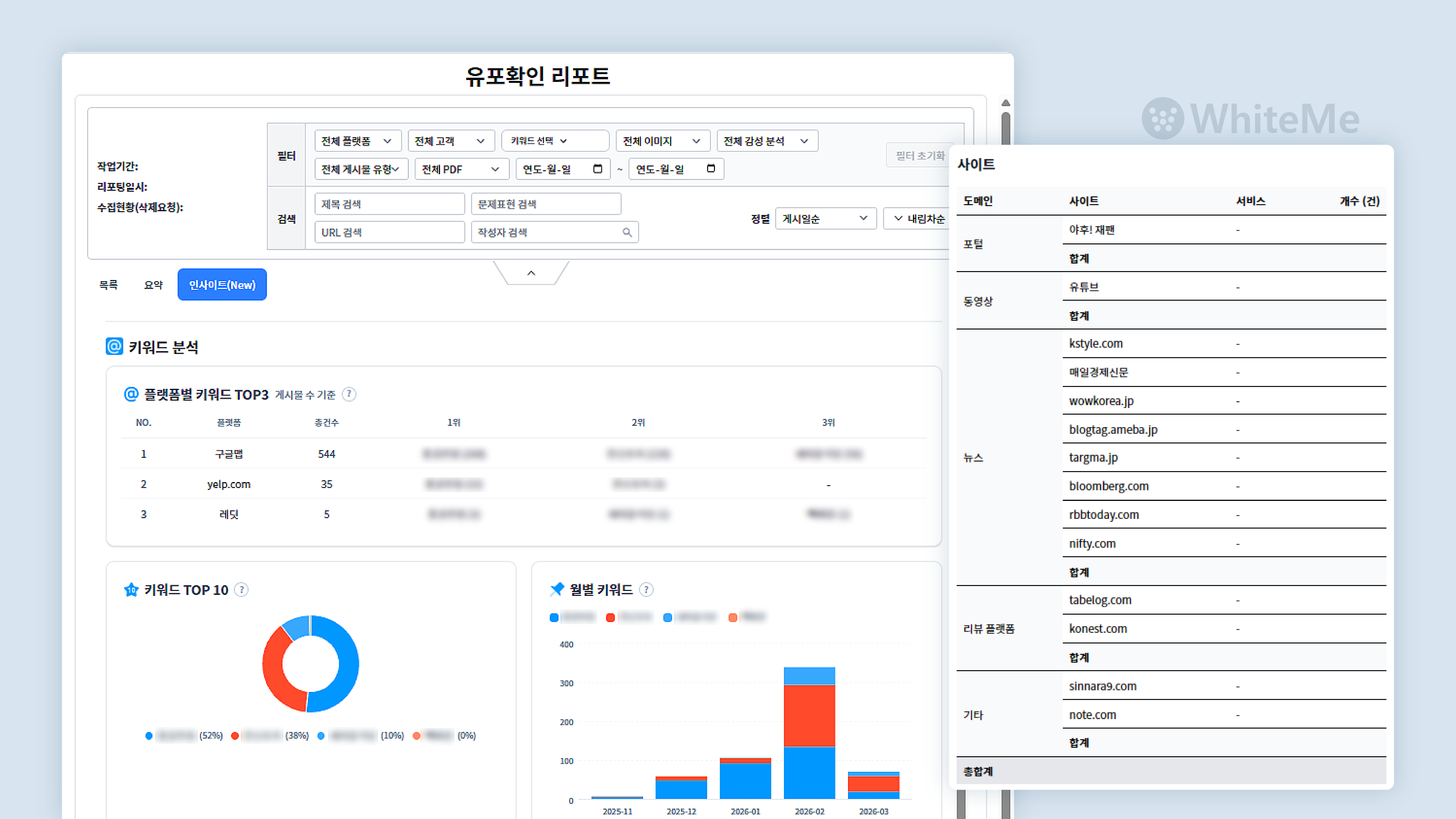
What if you need to secure overseas customer reviews and professional responses by country?
Managing overseas market response is not a task limited to specific companies. The channels through which responses are accumulated vary from country to country, and even for the same brand, the way issues are formed varies depending on the market, so difficulties with similar structures may be repeated regardless of size.
In fact, many companies are looking at local reactions, but if headquarters, local corporations, and business units each understand the content based on different standards, judgment will naturally be delayed even if data accumulates.What is important is closer to ‘understanding the market of each country’ rather than monitoring.
Are you experiencing the following situation repeatedly? If so, it may be time to take a look at your company’s current overseas reputation management structure.
Overseas reputation management check points
- Negative reviews are visible, but it is difficult to clearly explain why they are repeated.
- It is difficult to accurately determine the cause of article exposure, brand reviews, and store reviews.
- Problems that local stores are aware of are being identified late or understood differently at headquarters.
- Operational issues and search exposure issues are reported together without distinction.
White Me structurally organizes scattered responses in these situations and helps headquarters and local companies view overseas reputation on the same basis.
The key is to read the data accumulated across multiple channels by country and brand so that you can quickly identify which issues actually need to be addressed first.
If the number of overseas customer reviews is increasing, but you are still stuck with the inefficient method of checking and sharing separately internally, it is time to reexamine your reputation management method in overseas markets.

If you would like to organize the different reputation trends by country into one standard, or if you would like to resolve the damage caused by repeated online reviews and search exposure, please contact White Me. You can start by looking at the monitoring structure that suits your current situation.
👉Inquire about White Me service
📚Download service introduction
※ This case image was created with AI to protect customers. White Me protects customer information in accordance with NDA.